
Spain vs France: Which Team Is Better? The 2026 Semifinal Verdict & SWOT Analysis
Comparison Insights
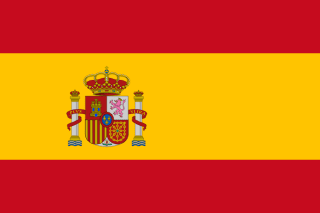
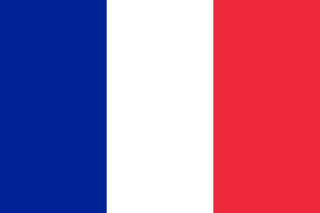
Spain vs France was settled on the pitch: Spain won the 2026 World Cup semifinal 2-0 in Dallas on July 14, then beat Argentina 1-0 after extra time in the final to lift the trophy. So the short answer to "which team is better" is Spain — but the margin came from somewhere most previews were not looking. Going in, this was framed as a coin flip between two models: Spain's possession-dominant, positional system under Luis de la Fuente, and France's star-led model built on Kylian Mbappe and Ousmane Dembele. The result inverted the usual logic. Mbappe won the Golden Boot with 10 goals and France still went out in the semifinal; Spain's Rodri took the Golden Ball, Unai Simon the Golden Glove, and 19-year-old center-back Pau Cubarsi was named Best Young Player. Spain conceded one goal across all seven matches — the fewest in World Cup history. Call it Spain's Low-Variance Title: the team with the highest floor beat the team with the highest ceiling. That is the same trade-off SWOT analysis surfaces in business — a star-dependent organization has a high ceiling and a low floor, while a system-dependent one has fewer ways to fail over a long run. France's SWOT profile is not weaker than Spain's; it is riskier, and a knockout tournament is exactly the format that punishes variance.
SpainSWOT Comparison
Spain
- 2026 World Cup Champions: Spain beat Argentina 1-0 after extra time in the final (Ferran Torres, 106') to win their second World Cup after 2010 — becoming the first nation to hold the men's and women's World Cups simultaneously — and conceded only one goal across the entire seven-match tournament, the fewest in World Cup history.
- Reigning European Champions: Spain won Euro 2024 as the first team ever to win all seven matches at a single Euros, beating England 2-1 in the final — a generational peak that carried into the 2026 World Cup title run.
- Generational Talent Core: An elite spine of Lamine Yamal (18, Barcelona), 2024 Ballon d'Or winner Rodri (Manchester City), Pedri (Barcelona), and Nico Williams (Athletic Bilbao) blends world-class youth with proven winners.
- Possession Identity: De la Fuente's positional, possession-dominant system controls tempo and starves opponents of the ball — a structural advantage in a 39-day tournament where game management preserves energy.
- Squad Depth: La Roja's player pool is deep enough that injuries to individuals rarely break the system, with multiple top-five-league starters competing for every position.
- Tournament Pedigree: A World Cup winner (2010) and four-time European champion, Spain carries the institutional know-how of navigating knockout pressure that most of the 48-team field lacks.
France
- World No. 1 Ranking: France sits atop the April 2026 FIFA rankings and is a co-favorite around +500 — the most consistently elite tournament team of the past decade.
- Mbappe Firepower: Captain Kylian Mbappe enters his third World Cup as one of the planet's most decisive attackers, capable of winning knockout games single-handedly.
- Ballon d'Or Depth: With reigning Ballon d'Or winner Ousmane Dembele plus Michael Olise and Desire Doue, France's attacking talent pool is arguably the deepest in the field.
- Recent Finalists: France reached the 2022 final (losing to Argentina on penalties) and won in 2018 — back-to-back deep runs that prove a durable winning machine.
- Deschamps Tournament Craft: In his final tournament after 13 years, Deschamps brings unmatched experience in pragmatic, knockout-tournament game management.
Spain
- Yamal Fitness Question: Talisman Lamine Yamal injured his left hamstring in April 2026; de la Fuente expects him fit for the June 15 opener but conceded his minutes may be managed — a cloud over Spain's most decisive attacker.
- Striker Reliability: Spain's possession dominance has historically outpaced its clinical finishing, with recurring questions over a guaranteed 20-goal No. 9 to convert territorial control into goals.
- Nations League Final Scar: Spain lost the 2025 UEFA Nations League final to Portugal on penalties after a 2-2 draw — evidence that even peak possession can be undone in one-off shootouts.
- Target on Their Backs: As reigning Euro champions and betting favorites, every opponent will set up to frustrate them, and the pressure of favoritism has historically weighed on Spanish sides.
- Heat and Travel: A North American summer with matches in high-heat venues challenges a high-intensity pressing-and-possession model that depends on relentless running.
France
- End-of-Era Risk: Deschamps' announced departure after 2026 can cut both ways — a farewell motivation or a lame-duck distraction if results wobble.
- Squad Friction History: France has periodically battled internal tension and selection controversy; cohesion, not talent, has been its recurring vulnerability.
- Defensive Transition: Questions linger over the long-term spine as veteran defenders age, leaving the back line less settled than the glittering attack.
- Penalty Final Ghost: France lost the 2022 final on penalties despite Mbappe's hat-trick — a reminder that elite attack alone does not close out trophies.
- Mbappe Dependence: When Mbappe is contained or carrying knocks, France's attack can become predictable and over-reliant on individual brilliance.
Spain
- 48-Team Format Runway: With 32 of 48 teams advancing past the group stage, the expanded format lets a deep squad like Spain rotate and peak for the knockouts rather than burning out early.
- Yamal Star Moment: A World Cup at 18-19 could anoint Yamal as the face of global football for the next decade, a marketing and morale catalyst for the entire squad.
- Favorable Group H Draw: Drawn with Cape Verde, Saudi Arabia, and Uruguay, Spain has a clear path to top the group and bank rest while heavier hitters fight for second-place survival.
- Generational Window: With a core in or approaching its prime, 2026 opens a multi-cycle window where Spain can chase a second star to add to its 2010 title.
- System Over Stars: Spain's identity is replicable across the squad, so it can absorb a tournament injury and still field a coherent XI — an edge in a long, attritional event.
France
- Farewell Narrative: Deschamps' final tournament offers a powerful unifying storyline to forge squad cohesion around a shared send-off mission.
- Group I Control: Drawn with Senegal, Iraq, and Norway, France can top the group and bank recovery time before the knockouts.
- Mbappe's Prime: A World Cup squarely in Mbappe's peak years is the ideal window to convert individual greatness into a second winner's medal.
- Attacking Embarrassment of Riches: Rotating Dembele, Olise, and Doue keeps the front line fresh across a 39-day tournament and stretches tiring defenses late.
- Format Margin for Error: The expanded knockout bracket lets a top seed absorb a slow start and still progress, reducing the cost of a group-stage stumble.
Spain
- Knockout Variance: One-off knockout football rewards efficiency and set pieces over territorial control; a low-block opponent plus a single counterattack can end a favorite's tournament.
- Peer Favorites: France (FIFA No. 1), England, Portugal, and the South American giants all carry the firepower to beat Spain on a given night in the round of 32 onward.
- Penalty Shootout Risk: Having just lost a major final on penalties to Portugal, Spain's shootout vulnerability is a live threat in any tight knockout.
- Refereeing and VAR Swings: In a high-stakes tournament, marginal VAR decisions can flip tight games against a side that relies on sustained control rather than chaos.
- Overreliance on Yamal: If Yamal's hamstring flares or he is man-marked out of a match, Spain's creative ceiling drops sharply.
France
- Peer Favorites: Spain, England, Portugal, Brazil, and Argentina all have the quality to end France's run in a single knockout tie.
- Cohesion Breakdown: France's history shows that off-pitch friction can derail a favorite faster than any opponent.
- Knockout Variance: Pragmatic tournament football still hinges on fine margins — one set piece or VAR call can topple the No. 1 seed.
- Defensive Exposure: Elite, fast opponents can target the transition moments where France's evolving back line is least settled.
- Heat and Schedule: North American summer conditions test even deep squads, raising the injury and fatigue risk through a long campaign.
Explore Full Analysis
Frequently Asked Questions
Which team is better, Spain or France?
Spain, and the 2026 World Cup settled it directly. Spain beat France 2-0 in the semifinal in Dallas on July 14, 2026, then beat Argentina 1-0 after extra time in the final to win the tournament. Spain also finished with the best defensive record in World Cup history, conceding one goal in seven matches. France still produced the tournament top scorer in Kylian Mbappe (10 goals), so France was not short of quality — Spain was simply harder to beat.
What was the score in Spain vs France at the 2026 World Cup?
Spain won 2-0. The two sides met in the first semifinal on July 14, 2026 in Dallas, in what had been widely billed as a de facto early final between the two highest-ranked teams in the world. Spain controlled the game and won comfortably rather than narrowly, and went on to lift the trophy at MetLife Stadium on July 19.
Why did Spain beat France?
Spain won on floor, not ceiling. France was built on elite individual firepower — Mbappe and Ousmane Dembele — which produces a very high ceiling but depends on specific players producing on the day. Spain was built on a possession-dominant positional system under Luis de la Fuente that keeps functioning when any one player is marked out of the game. Across a knockout tournament, the format rewards the side with fewer ways to fail, and Spain never gave France the platform to counter.
Did France have the better individual players?
Arguably yes, and it was not enough. Mbappe won the Golden Boot with 10 goals from a team that did not reach the final — the clearest possible illustration that individual ceiling and tournament results are different things. Spain, meanwhile, took the Golden Ball (Rodri), the Golden Glove (Unai Simon), and Best Young Player (19-year-old center-back Pau Cubarsi). Spain's awards went to the system core; France's went to its one game-breaker.
What is the key strategic difference between Spain and France?
Spain is system-dependent and France is star-dependent. Spain's possession identity is replicable across the squad, so its performance floor is unusually high and it rarely breaks when an individual is unavailable. France concentrates value in a small number of exceptional attackers, giving it a higher ceiling but more variance and greater exposure to squad cohesion problems and an aging defensive spine. In SWOT terms the two profiles are not stronger and weaker — they are low-variance and high-variance.
Are Spain and France still the two best national teams after 2026?
Both remain in the top tier, with Spain now clearly ahead. Spain holds Euro 2024 and the 2026 World Cup simultaneously and has a startlingly young spine — Lamine Yamal at 18 and Cubarsi at 19 — which points to a genuine window through Euro 2028 and the 2030 World Cup Spain co-hosts. France exits the cycle with Didier Deschamps departing after his farewell tournament and a squad that still has Mbappe in his prime, making the coaching transition the single biggest variable in its next SWOT profile.